Our Picks: Japanese Culture【特集:日本文化】
-
中学1年生 英語リスニング問題⑮
中学1年生 英語リスニング問題⑮
【1年生総復習問題・実力テスト 】
※おおよそ中学1年生の全範囲の内容。学年末テスト対策、1年生の総復習用などにお役立てください。
問題&解答用紙 ~プリントアウトしてご利用ください。~
PDF:ふくろうドリル 英語リスニング 中学1年生⑮ 問題&解答用紙解答&放送原稿
PDF:ふくろうドリル 英語リスニング 中学1年生⑮ 解答&放送原稿※当サイトの音源は、AI音声にて作成されています。
※当サイトの問題における英単語・英文法等は、教科書に準拠しています。


-
The History and Art of Japanese Candy:日本の飴の歴史と芸術

The History and Art of Japanese Candy:日本の飴の歴史と芸術
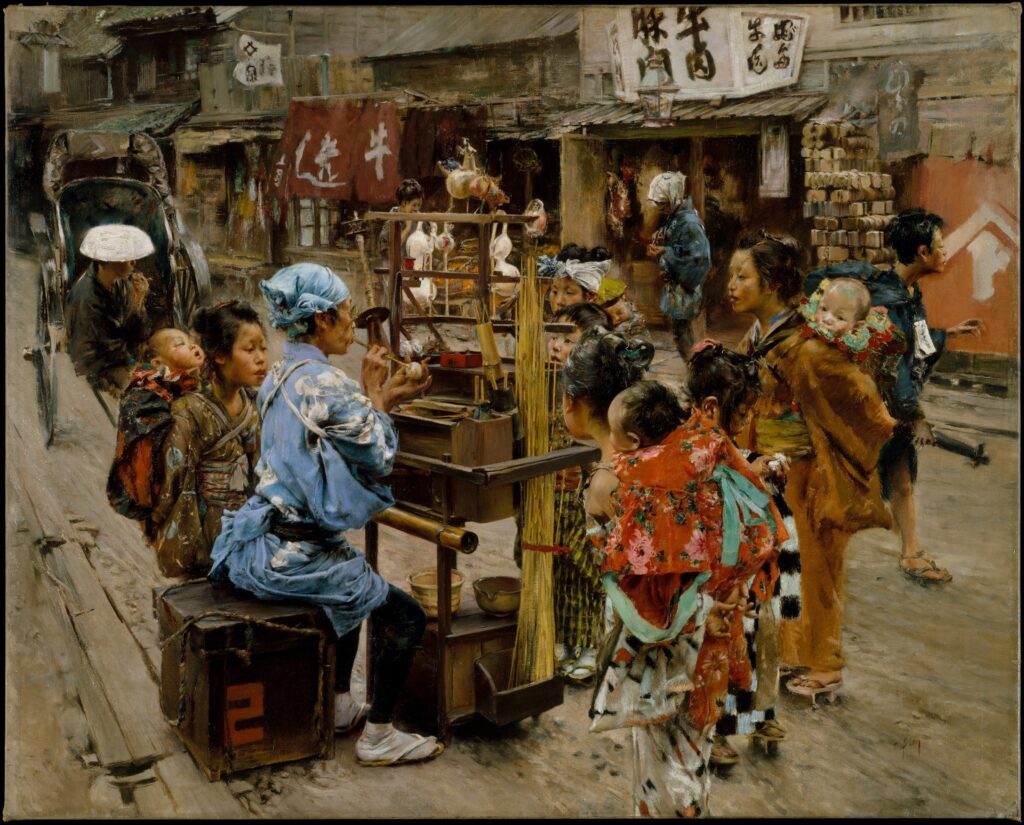
Source:
The Ameya (1893) by Robert Frederick Blum
The Metropolitan Museum of Art, New York
(Public Domain)出典:
ロバート・フレデリック・ブラム《アメヤ》(1893)
メトロポリタン美術館(ニューヨーク)所蔵
(パブリックドメイン)Have you ever seen this picture?
(あなたはこの絵を見たことがありますか。)This picture was painted by Robert Frederick Blum in 1893.
この絵は1893年にロバート・フレデリック・ブラムによって描かれました。He was an American painter who visited Japan in the 19th century.
彼は19世紀に日本を訪れたアメリカ人の画家でした。It shows a candy craftsman called an “Ameya.”
それ〔絵〕は「飴屋」と呼ばれる飴職人を描いています。In the Edo period, people called Ameya walked around towns selling candy.
江戸時代には、飴屋と呼ばれる人々が町を歩き回り、飴を売っていました。Japan has a long tradition of candy art.
日本には飴細工の長い伝統があります。An Ameya makes small candy animals for children.
飴屋は子どものために小さな飴の動物を作ります。The candy is heated and shaped by hand.
飴は熱せられ、手で形作られます。He uses candy like a glassblower.
彼はガラス細工職人のように飴を扱います。Children who watch the craftsman are often very excited.
その職人を見ている子どもたちは、しばしばとてもワクワクします。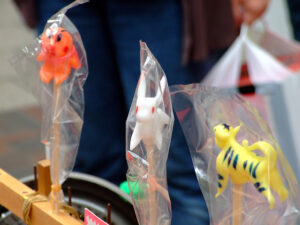
Source: Wikimedia Commons
Photo by Siriusplot
License: CC BY-SA 3.0出典:Wikimedia Commons
撮影:Siriusplot
CC BY-SA 3.0The history of candy in Japan is very long.
日本における飴の歴史はとても長いです。The Nihon Shoki was written about 1,300 years ago, and it talks about candy.
『日本書紀』は約1,300年前に書かれ、その中で飴について触れています。But it was not like the candy we eat today.
しかし、それは私たちが今日食べている飴のようなものではありませんでした。It was mizuame, a sweet syrup.
それは水飴という、甘いシロップでした。Mizuame is made from starch and malt.
水飴はデンプンと麦芽から作られます。Malt has an enzyme that changes starch into sugar.
麦芽にはデンプンを糖に変える酵素が含まれています。Because of this, the syrup becomes sweet.
そのため、シロップは甘くなります。In the Heian period, candy was already sold in Kyoto.
平安時代、飴はすでに京都で売られていました。However, it was used mainly for cooking.
しかし、それは主に料理のために使われていました。In the Edo period, sugar became popular, so candy became more common as a snack.
江戸時代に、砂糖が普及したため、飴はおやつとしてより一般的になりました。Candy has become sweeter and more colorful over time.
時を経て、飴はより甘く、よりカラフルになってきました。Today, candy art has been loved by many people.
今日まで、飴細工は多くの人々に愛され続けてきました。
Some craftsmen have been making candy animals for many years.
長年にわたり飴の動物を作り続けている職人もいます。If you visit a festival in Japan, you may see an Ameya making candy.
もし日本の祭りを訪れれば、飴を作っている飴屋を見るかもしれません。Candy is one of the most interesting traditional sweets in Japan.
飴は日本で最も興味深い伝統的なお菓子の一つなのです。
Further Reading(参考リンク)
Japanese Candy – MAFF Web Magazine “aff”
https://www.maff.go.jp/j/pr/aff/1611/spe2_01.html
(農林水産省の広報誌「aff」による、日本の飴の歴史や種類の紹介)Amezaiku Candy Sculpting Class in Tokyo
https://www.maff.go.jp/e/policies/rural_dev/eatmeetjapan/winners-2020/2.html
(東京で体験できる飴細工の紹介ページ)What is Amezaiku? – Japanese Candy Sculpture
https://en.wikipedia.org/wiki/Amezaiku
(飴細工の歴史や技術の解説)Amezaiku – Traditional Japanese Candy Art
https://www.amezaiku.com/en/
(飴細工の紹介サイト)
Notes(注)
painter : 画家 century : 世紀(100年) craftsman : 職人 Ameya : 飴屋(飴を売ったり飴細工を作ったりする人) Edo period : 江戸時代(1603–1868) tradition : 伝統 glassblower : ガラス細工職人 Nihon Shoki : 日本書紀(日本の古い歴史書) syrup : シロップ starch : デンプン malt : 麦芽 enzyme : 酵素 festival : 祭り traditional : 伝統的な

-
「山くじら」と「バリの町」?~“Yamakujira” and “The Bali Town”?~
「山くじら」と「バリの町」?~“Yamakujira” and “The Bali Town”?~
Have you ever visited Shimane Prefecture?
みなさんは島根県を訪れたことがありますか。
・
In Shimane, there is the Iwami Ginzan Silver Mine, which was registered as a UNESCO World Heritage Site in 2007.
島根県には、2007年にユネスコ世界遺産に登録された石見銀山があります。
・
Many people visit this historical place, but there is another town that is just as interesting.
たくさんの人がこの歴史的な場所を訪れますが、実はそれに負けないくらいおもしろい町があります。
・
This town is Misato.
その町が、美郷町です。
・
Misato is a town along the Gono River, and it has very rich local culture.
美郷町は江の川(ごうのかわ)の流れにそった町ですが、地域の文化がとても豊かです。
・
People value traditional events such as kagura and many local festivals.
人びとは、神楽などの伝統的な神事や、さまざまな地域のお祭りを大切にしています。
・
They also enjoy river fish such as sweetfish, called “ayu,” and a special dish called “yamakujira.”
また、「あゆ」と呼ばれる鮎などの川魚や、「山くじら」と呼ばれる特別な料理も楽しんでいます。
・
So, what is “yamakujira”?
では、「山くじら」とは何でしょうか。
・
The word means “mountain whale,” so is it real whale meat?
「山のクジラ」という意味だから、本物のクジラの肉なのでしょうか。
・
Or do people eat whale meat in the mountains?
それとも山でクジラ肉を食べるのでしょうか。
・
Of course not.
もちろん違います。
・
“Yamakujira” is actually wild boar meat,Inoshishi meat.
「山くじら」とは、実はイノシシの肉のことなのです。
・
In the past, people in Japan were told not to eat the meat of four-legged animals.
昔、日本の人々は、四つ足の動物の肉を食べてはいけないと言われていました。
・
So they didn’t say “wild boar” and called it “yamakujira.”
そのため、彼らは「イノシシ」と言わずに「山くじら」と呼んだのです。
・
Today, you can even eat “yamakujira ramen” in Misato.今では、美郷町で「山くじらラーメン」を食べることもできます。
・
The Gono River is usually calm, but in the history of the town it has sometimes caused big floods.
江の川はふだんはおだやかな川ですが、町の歴史をふり返ると、大きな洪水を起こしたこともあります。
・
The people of Misato decided to use this river in a positive way.
美郷町の人びとは、この川を前向きに生かそうと考えました。
・
They wanted to make canoeing on the river a special feature of the town.
そこで、川でのカヌーを町の特色にしようとしたのです。
・
In 1991, Misato built a canoe museum.
1991年、美郷町は、カヌー博物館を建てました。
・
To celebrate its opening, an idea came up: “Let’s collect boats from around the world.”
開館を記念して、「世界の船を集めてみよう」というアイデアが生まれました。
・
One idea was to invite a canoe from Bali, an island in Indonesia.
その一つとして、インドネシアの島であるバリ島からカヌーを招こう、という話が出ました。
・
Bali is known for its traditional boats and crafts.
バリ島は、伝統的な船や工芸品で知られています。
・
Craftsmen from Mas Village in Bali came to Misato and showed how to make a wooden canoe.
バリ島のマス村から職人が美郷町にやって来て、木のカヌーを作る様子を実演しました。
・
This was the beginning of a new exchange.
これが、新しい交流のはじまりでした。
・
In 1993, Misato and Mas Village in Bali became sister towns.
1993年、美郷町とバリ島のマス村は姉妹都市になりました。
・
Since then, people from both areas have visited each other many times.
それ以来、両方の地域の人びとが、何度もおたがいの町を訪ね合ってきました。
・
Students have done homestays, and Balinese gamelan music has been played in Misato.
生徒がホームステイをしたり、バリのガムラン音楽が美郷町で演奏されたりしています。
・
Balinese culture respects old traditions but also creates new art.
バリの文化は、昔からの伝統を大切にしながら、新しい芸術も生み出している文化です。
・
Today, Misato calls itself “The Town of Bali.”
今、美郷町は自分たちの町を「バリの町」と呼んでいます。
・
The town enjoys Balinese culture and wants to connect with “Bali lovers” all over the world.
バリの文化を楽しみながら、世界中の「バリ好き」とつながっていきたいと考えているのです。
・
Through these efforts, Misato is finding new good points about itself and is trying to become a creative, warm, and energetic town.
こうした取り組みを通して、美郷町は自分たちの新しい良さを見つけ、創造性が高く、あたたかく、元気な町になろうとしています。
・
Please visit Misato someday.
みなさんも、いつか美郷町を訪れてみてください。
・
参考にしたホームページ
島根県邑智郡美郷町の公式サイト(島根県美郷町 https://www.town.shimane-misato.lg.jp/)
-
日本の暮らしと花~四季の移ろいと文化 ~:The Life of Japan and Flowers: Seasons and Culture

日本の暮らしと花~四季の移ろいと文化 ~:The Life of Japan and Flowers: Seasons and Culture
1.日本では、四季の移り変わりを花を通して感じることができます。
In Japan, we can feel the change of the four seasons through flowers.2.春の桜や藤、夏の朝顔、秋の野菊や彼岸花、冬の梅や水仙など、季節ごとの花が生活に彩りを与えています。
Flowers of each season—cherry blossoms and wisteria in spring, morning glories in summer, wild chrysanthemums and red spider lilies in autumn, and plum blossoms and daffodils in winter—add color to our lives.3.これらの花は、単に美しいだけでなく、季節の到来を告げる合図としての役割も担っています。
These flowers are not only beautiful but also signals that tell us a new season has come.※not only A but also B =「AだけでなくBも」、「AばかりでなくBもまた」
4.特に桜と菊は、法律で定められたものではありませんが、長きにわたり愛され「日本の国花」として広く受け入れられてきました。
Especially, cherry blossoms and chrysanthemums are not fixed by law, but they have long been loved and are widely accepted as Japan’s national flowers.5.また、各都道府県にはその土地と関わりの深い花が県花として選ばれており、地域ごとの多様性を楽しむことができます。
In addition, each prefecture has a “prefectural flower,” chosen from flowers closely related to the area, so we can enjoy each region’s diversity.6.花は日本の文化とも強く結びついています。
Flowers are also strongly connected to Japanese culture.7.俳句では花の名前が季節を表す季語として用いられ、歌や着物の柄にも多く登場します。
In haiku, flower names are used as seasonal words, and flowers often appear in songs and kimono designs.8.春のお花見は、日本ならではの楽しみ方です。
Cherry-blossom viewing in spring is a custom unique to Japan.9.私たちは自然の中で花を眺めるだけでなく、庭で育てたり、部屋に飾ったりして楽しみます。
We not only look at flowers in nature but also grow them in gardens and decorate our rooms with them.10.また、花の美しさを表現する伝統文化である華道(生け花)も受け継がれています。
Also, ikebana (flower arrangement), a traditional art that shows the beauty of flowers, has been passed down.11.こうした花を支えているのが日本の農業です。
Japanese agriculture supports these flowers.12.観賞用の植物である花き(かき)は全国で栽培されており、特に愛知県では重要な産業となっています。
Ornamental plants, called kaki (flowers for viewing), are grown all over the country, and in Aichi Prefecture they are an important industry.13.農家の人々が丁寧に育てた花が、私たちの生活空間を明るくしてくれています。
Flowers carefully grown by farmers brighten our living spaces.14.さらに、日本ではカーネーションやバラなど外国生まれの花も含め、約4万種類もの花きが生産されています。
Furthermore, about forty thousand kinds of ornamental flowers are produced in Japan, including foreign flowers like carnations and roses.※Furthermore=さらに、その上
15.毎年2,000~3,000の新品種が生まれており、その増え方は世界トップレベルです。
Every year two to three thousand new varieties are created, and this growth is among the best in the world.16.色や形、咲く時期を工夫して新しい魅力を持つ花を生み出す日本の育種技術は、海外からも高く評価されています。
Japan’s breeding skills, which create new flowers with different colors, shapes, and blooming times, are highly valued around the world.17.季節とともに花を楽しむことは、昔から続く日本の暮らしの知恵であり、文化そのものです。
Enjoying flowers with the seasons is old wisdom in Japanese life and is part of the culture itself.18.身近な一輪の花から、季節の気配や人の思い、日本の良さを感じ取ることができるでしょう。
From even a single flower near you, you can feel the season, people’s feelings, and the good points of Japan. -
鳥人幸吉:日本の空を飛んだ男 Kokichi Ukita: The Birdman of Japan

鳥人幸吉:日本の空を飛んだ男 Kokichi Ukita: The Birdman of Japan
Kokichi Ukita was born in 1757 in Hachihama, Okayama.
浮田幸吉は1757年、岡山(現在の岡山県)、八浜で生まれました。He worked as a craftsman in a town near Okayama Castle.
岡山城の近くの町で職人として働いていました。He liked to watch birds and wanted to fly like them.
彼は鳥を見るのが好きで、鳥のように飛びたいと思いました。He studied how birds fly.
彼は鳥がどうやって飛ぶのかを研究しました。He made wings from bamboo, paper, and cloth.
竹や紙、布で翼を作りました。One night in 1785, Kokichi jumped from a bridge in Okayama.
1785年のある夜、幸吉は岡山の橋から飛びました。He flew about 20 meters.
彼は約20メートル飛びました。People were very surprised.
人々はとても驚きました。At that time, flying was not allowed.
そのころ、空を飛ぶことは許されていませんでした。Kokichi was punished and had to leave the town.
幸吉は罰を受け、町を追い出されました。He went to Shizuoka and started a store called “Bizenya.”
彼は静岡に行き、「備前屋(びぜんや)」という店を始めました。He also made fake teeth and fixed watches.
彼は入れ歯を作ったり、時計を修理したりもしました。He tried to fly again in Shizuoka, but the local officials stopped him.
彼は静岡でもう一度飛ぼうとしましたが、役人に止められました。Later, he moved to a town called Mitsuke in Iwata City.
その後、磐田市の見付(みつけ)という町に引っ越しました。He opened a small restaurant there.
そこで小さな飯屋(食堂)を開きました。Kokichi died in 1847 at the age of 90.
幸吉は1847年、90歳で亡くなりました。His grave is in Daikenji Temple in Iwata.
彼のお墓は磐田市の大見寺(だいけんじ)にあります。People still remember him as the first man in Japan who tried to fly.
日本で初めて空を飛ぼうとした人として、今も人々に知られています。 -
野内与吉とマチュピチュの物語 Yokichi Nouchi and the Story of Machu Picchu
Machu Picchu is a famous World Heritage Site in Peru.
マチュピチュはペルーにある有名な世界遺産です。It is known for old Incan ruins in the high Andes Mountains.
アンデス山脈の高い場所にある古いインカの遺跡で知られています。Near the ruins is Machu Picchu Village. A Japanese man named Yokichi Nouchi helped make this village.
遺跡の近くにマチュピチュ村があります。日本人の野内与吉さんがこの村を作るのを助けました。Yokichi was born in Otama Village, Fukushima, Japan.
与吉さんは日本の福島県大玉村で生まれました。His family had a big farm.
家は大きな農家でした。In 1917, when he was 21 years old, he went to Peru to work.
1917年、21歳のときに仕事のためペルーに行きました。He worked on a farm but quit because it was too hard.
農園で働きましたが、きつくてやめました。Then he went to other countries, and later came back to Peru.
その後ほかの国に行き、またペルーに戻りました。He helped build a railway between Cusco and Santa Ana. In 1929, the train reached Machu Picchu.
クスコとサンタ・アナの間に鉄道を作るのを手伝い、1929年に列車はマチュピチュに着きました。He moved to Machu Picchu Village with his wife Maria.
妻のマリアさんとマチュピチュ村に引っ越しました。They had children. Their second son Jose became the village mayor.
子どもが生まれ、次男のホセさんは村長になりました。Yokichi brought water to the village, made electricity, and fixed machines.
与吉さんは村に水を引き、電気を作り、機械を直しました。In 1935, he built Hotel Nouchi, the first big wooden building in the village.
1935年に村で初めての大きな木の建物「ホテル・ノウチ」を作りました。People used the hotel for the post office, police, and other village work.
人々はホテルを郵便局や交番などに使いました。Yokichi spoke Spanish, English, and Quechua, a local language.
与吉さんはスペイン語、英語、そして地元のケチュア語を話しました。He worked as a guide and helped a Japanese researcher named Yositaro Amano.
ガイドとして働き、日本の研究者・天野芳太郎さんを助けました。From 1939 to 1941, he was the village leader.
1939年から1941年まで村のリーダーをしました。In 1947, a big flood came. In 1948, he became the mayor to help fix the village.
1947年に大きな洪水がありました。1948年に村をなおすため村長になりました。In 1968, after 52 years, Yokichi visited Japan.
1968年、52年ぶりに日本を訪れました。He gave talks about his life in Peru. People called him a “modern-day Urashima Taro.”
ペルーでの生活について話をしました。「今の浦島太郎」とも言われました。His family wanted him to stay, but he went back to Peru. He died two months later in 1969.
家族は日本にいてほしかったですが、ペルーに帰り、2か月後に亡くなりました。Now his grandson, Cesar Nouchi, tells people his story and works to connect Japan and Peru.
今は孫のセサル・ノウチさんが与吉さんの話を伝え、日本とペルーをつなぐ活動をしています。A memorial plate will be placed in front of the village office in Machu Picchu.
マチュピチュの村役場の前に記念プレートが設置される予定です。To learn more about life in Peru, you can watch the movie Wiñaypacha (Japanese title:『アンデス、ふたりぼっち』) by Oscar Catacora.
ペルーのくらしをもっと知るには、オスカル・カタコラ監督の映画『アンデス、ふたりぼっち(原題:Wiñaypacha)』を見るとよいです。It is about an old couple living alone in the high Andes.
アンデスの高い山でふたりで住むお年寄りの話です。They wait for their son, but he never comes back.
息子を待っていますが、帰ってきません。The movie is in the Aymara language and shows hard life and old traditions.
映画はアイマラ語で話され、むずかしい生活と昔からの習慣が出てきます。It is a quiet and moving story about life in the Andes.
アンデスでの生活について、しずかで心に残るお話です。 -
「信州ひすいそば」を知っていますか?:Do You Know About “Shinshu Hisui Soba”?
「信州ひすいそば」を知っていますか?:Do You Know About “Shinshu Hisui Soba”?
Have you ever heard of “Shinshu Hisui Soba”?
「信州ひすいそば」を聞いたことがありますか?It is the name of a new type of soba (buckwheat noodles) produced in Nagano Prefecture.
これは、長野県で生産される新しい種類のそばの名称です。The name is used only for soba that meets certain standards in cultivation, processing, and sales.
この名前は、栽培・加工・販売の基準を満たしたそばだけに使われます。
“Shinshu Hisui Soba” is made using a new variety of buckwheat called “Nagano S8.”
「信州ひすいそば」は、「長野S8号」という新しいそば品種を使用して作られます。This variety was developed by the Nagano Vegetable and Flower Experiment Station.
この品種は、長野県野菜花き試験場によって開発されました。It took ten years to complete its development.
開発には10年の歳月がかかりました。Nagano Prefecture is working to promote it as a new local brand.
長野県は、これを新たな地域ブランドとして広めようとしています。
Nagano S8 has two main features: a vivid color and a rich aroma.
「長野S8号」には、「色が鮮やかであること」と「香りが高いこと」という2つの特徴があります。The soba made from this buckwheat has a beautiful color like jade.
このそばは、まるで翡翠のような美しい色をしています。Jade is a green gemstone that has been valued in Asia for centuries.
翡翠(ひすい)は、何世紀にもわたってアジアで珍重されてきた緑色の宝石です。It has a light green tone, similar to tea soba but more vivid.
お茶そばに似た薄い緑色で、より鮮やかな色合いです。
If you visit Nagano, please try “Shinshu Hisui Soba.”
長野を訪れた際には、ぜひ「信州ひすいそば」を食べてみてください。It is a special soba made with care and effort.
これは、手間と時間をかけて作られた特別なそばです。 -
夏を彩る、江戸風鈴の物語:The Story of Edo Wind Chimes That Color the Summer
夏を彩る、江戸風鈴の物語:The Story of Edo Wind Chimes That Color the Summer
Wind chimes make a nice sound and make summer feel fun.
風鈴は心地よい音を出して、夏を楽しく感じさせてくれます。In Tokyo, there are special wind chimes called Edo Furin.
東京には、江戸風鈴という特別な風鈴があります。They started about 300 years ago, in the Edo period.
これは約300年前、江戸時代に始まりました。Even today, people still make them by hand.
今でも、江戸風鈴は手作りで作られています。They keep the old way of making them, but they also make new designs for today’s life.
昔ながらの作り方を守りつつ、現代の生活に合わせた新しいデザインも生み出されています。Edo Furin are made with a way called “Chubuki.”
江戸風鈴は「宙吹き(ちゅうぶき)」という方法で作られます。Hot glass is put on a stick, and people blow air into it to make a round shape.
熱いガラスを棒につけて、そこに息を吹き込み、丸い形にします。Each wind chime is a little different because they are all handmade.
すべて手作りなので、ひとつひとつ大きさや厚み、音色が少しずつ違います。One special thing about Edo Furin is the edge where the glass is cut.
江戸風鈴の特徴の一つは、ガラスを切った縁にあります。It is not smooth.
その縁はなめらかではありません。Because of this, the small glass stick inside hits the edge and makes a beautiful sound.
そのため、中の小さなガラス棒が縁に当たって、きれいな音を奏でます。Glass wind chimes started in the middle of the Edo period.
ガラスの風鈴は江戸時代中頃に登場しました。Later, in the Meiji period, many people in Japan loved them.
その後、明治時代になると、日本中で多くの人々に愛されるようになりました。A long time ago, wind chimes were often sold at the Hozuki Market at a big temple in Tokyo.
昔、風鈴は東京の大きなお寺で開かれる「ほおずき市」でよく売られていました。Many wind chimes were hung on hozuki plants (ground cherries).
多くの風鈴が、ほおずき(鬼灯)という植物に吊るされていました。Later, cheap wind chimes from other countries became common, so fewer Edo Furin were made.
しかしその後、外国から安い風鈴が入ってくるようになり、江戸風鈴は作られる数が減ってしまいました。Today, Edo Furin are mainly sold in department stores.
今日では、江戸風鈴は主にデパートで販売されています。Makers focus on good quality and sell about 20,000 to 30,000 every year.
職人たちは品質にこだわり、毎年2万〜3万個を販売しています。Recently, visitors from other countries also like to buy Edo Furin.
最近では、外国から来た旅行者にも江戸風鈴が人気です。Now there are special stands to put them inside the house, so people can enjoy them in new ways.
室内でも楽しめるように、特別なスタンドも作られるようになりました。In the past, red wind chimes were popular to keep bad things away.
昔は、悪いものを追い払うために赤い風鈴が人気でした。Today, people like clear and pretty designs more.
今では、透明で美しいデザインが好まれています。Every year, new designs are made.
毎年、新しいデザインが作られています。When COVID-19 was spreading, a design of Amabie (a lucky sea creature) became very popular.
COVID-19が流行していたときには、疫病除けの海の生き物「アマビエ」をモチーフにしたデザインが特に人気になりました。Even though life is changing, people find new ways to enjoy wind chimes.
時代が変わっても、人々は風鈴を楽しむ新しい方法を見つけています。Edo Furin will keep making people happy for a long time.
江戸風鈴はこれからも、長い間たくさんの人々を幸せにしてくれるでしょう。