The History and Art of Japanese Candy:日本の飴の歴史と芸術

The History and Art of Japanese Candy:日本の飴の歴史と芸術
Source:
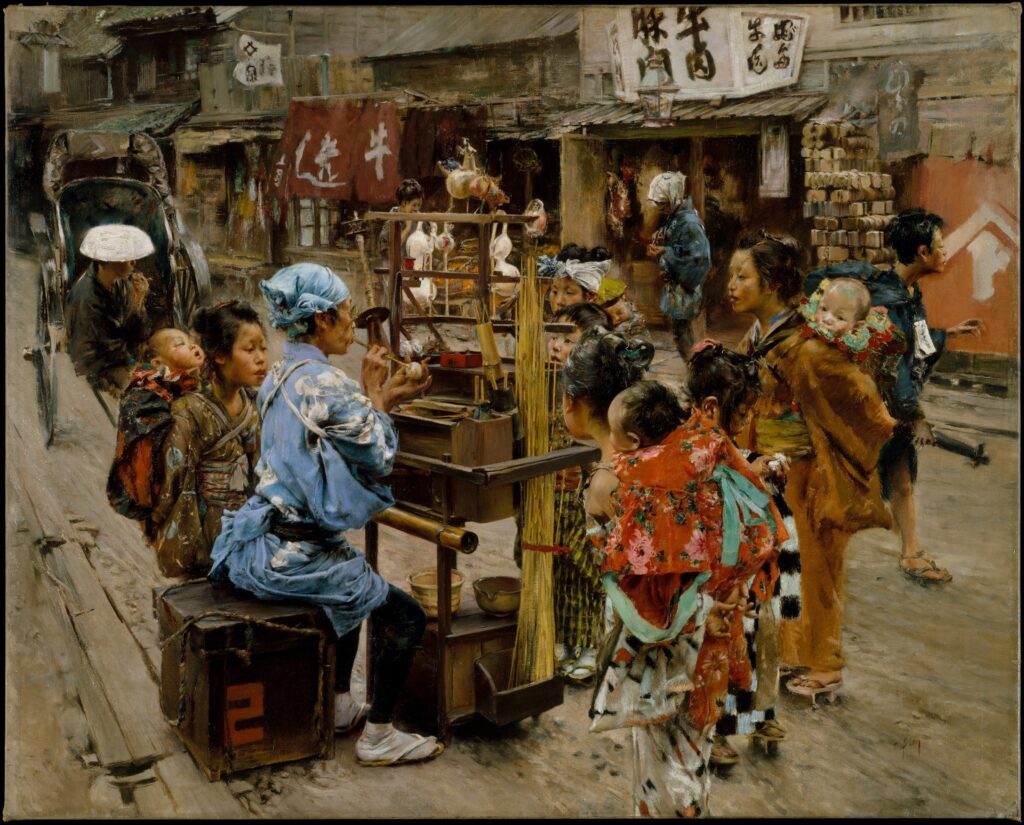
The Ameya (1893) by Robert Frederick Blum
The Metropolitan Museum of Art, New York
(Public Domain)
出典:
ロバート・フレデリック・ブラム《アメヤ》(1893)
メトロポリタン美術館(ニューヨーク)所蔵
(パブリックドメイン)
Have you ever seen this picture?
(あなたはこの絵を見たことがありますか。)
This picture was painted by Robert Frederick Blum in 1893.
この絵は1893年にロバート・フレデリック・ブラムによって描かれました。
He was an American painter who visited Japan in the 19th century.
彼は19世紀に日本を訪れたアメリカ人の画家でした。
It shows a candy craftsman called an “Ameya.”
それ〔絵〕は「飴屋」と呼ばれる飴職人を描いています。
In the Edo period, people called Ameya walked around towns selling candy.
江戸時代には、飴屋と呼ばれる人々が町を歩き回り、飴を売っていました。
Japan has a long tradition of candy art.
日本には飴細工の長い伝統があります。
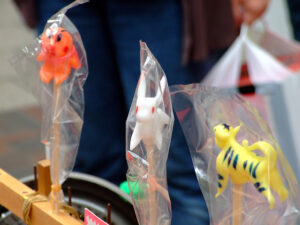
An Ameya makes small candy animals for children.
飴屋は子どものために小さな飴の動物を作ります。
The candy is heated and shaped by hand.
飴は熱せられ、手で形作られます。
He uses candy like a glassblower.
彼はガラス細工職人のように飴を扱います。
Children who watch the craftsman are often very excited.
その職人を見ている子どもたちは、しばしばとてもワクワクします。
Source: Wikimedia Commons
Photo by Siriusplot
License: CC BY-SA 3.0
出典:Wikimedia Commons
撮影:Siriusplot
CC BY-SA 3.0
The history of candy in Japan is very long.
日本における飴の歴史はとても長いです。
The Nihon Shoki was written about 1,300 years ago, and it talks about candy.
『日本書紀』は約1,300年前に書かれ、その中で飴について触れています。
But it was not like the candy we eat today.
しかし、それは私たちが今日食べている飴のようなものではありませんでした。
It was mizuame, a sweet syrup.
それは水飴という、甘いシロップでした。
Mizuame is made from starch and malt.
水飴はデンプンと麦芽から作られます。
Malt has an enzyme that changes starch into sugar.
麦芽にはデンプンを糖に変える酵素が含まれています。
Because of this, the syrup becomes sweet.
そのため、シロップは甘くなります。
In the Heian period, candy was already sold in Kyoto.
平安時代、飴はすでに京都で売られていました。
However, it was used mainly for cooking.
しかし、それは主に料理のために使われていました。
In the Edo period, sugar became popular, so candy became more common as a snack.
江戸時代に、砂糖が普及したため、飴はおやつとしてより一般的になりました。
Candy has become sweeter and more colorful over time.
時を経て、飴はより甘く、よりカラフルになってきました。
Today, candy art has been loved by many people.
今日まで、飴細工は多くの人々に愛され続けてきました。
Some craftsmen have been making candy animals for many years.
長年にわたり飴の動物を作り続けている職人もいます。
If you visit a festival in Japan, you may see an Ameya making candy.
もし日本の祭りを訪れれば、飴を作っている飴屋を見るかもしれません。
Candy is one of the most interesting traditional sweets in Japan.
飴は日本で最も興味深い伝統的なお菓子の一つなのです。
Further Reading(参考リンク)
Japanese Candy – MAFF Web Magazine “aff”
https://www.maff.go.jp/j/pr/aff/1611/spe2_01.html
(農林水産省の広報誌「aff」による、日本の飴の歴史や種類の紹介)
Amezaiku Candy Sculpting Class in Tokyo
https://www.maff.go.jp/e/policies/rural_dev/eatmeetjapan/winners-2020/2.html
(東京で体験できる飴細工の紹介ページ)
What is Amezaiku? – Japanese Candy Sculpture
https://en.wikipedia.org/wiki/Amezaiku
(飴細工の歴史や技術の解説)
Amezaiku – Traditional Japanese Candy Art
https://www.amezaiku.com/en/
(飴細工の紹介サイト)
Notes(注)
painter : 画家 century : 世紀(100年) craftsman : 職人 Ameya : 飴屋(飴を売ったり飴細工を作ったりする人) Edo period : 江戸時代(1603–1868) tradition : 伝統 glassblower : ガラス細工職人 Nihon Shoki : 日本書紀(日本の古い歴史書) syrup : シロップ starch : デンプン malt : 麦芽 enzyme : 酵素 festival : 祭り traditional : 伝統的な
